
.jpg "Chapter 2. 'Maintenance' - Gardening tips by expert Floor Korte - Floor's Moestuin")
Chapter 2. 'Maintenance' - Gardening tips by expert Floor Korte - Floor's Moestuin
In the previous chapter, we laid the foundation. Your Gardenworks is in the perfect spot, the ideal soil mix is in place, and the first seeds have been sown or plants planted. But what comes next? How do you ensure that those tender green shoots grow into a bountiful harvest? At Weltevree, we believe that outdoor living is part of your daily routine. Taking care of your plants is a perfect example of this: stepping outside to water them or check on how they are doing. It's not a chore, but a moment of relaxation.
In this series we ask expert Floor Korte, owner of Floors Moestuin, everything about successfully maintaining your vegetable garden. We have now reached level 2: Maintenance. Here you can read how to ‘read’ your plants and keep the soil in top condition.
Maintaining your Gardenworks
How do you learn to ‘read’ what your plants need? Such as water, trimming/pruning, etc.?
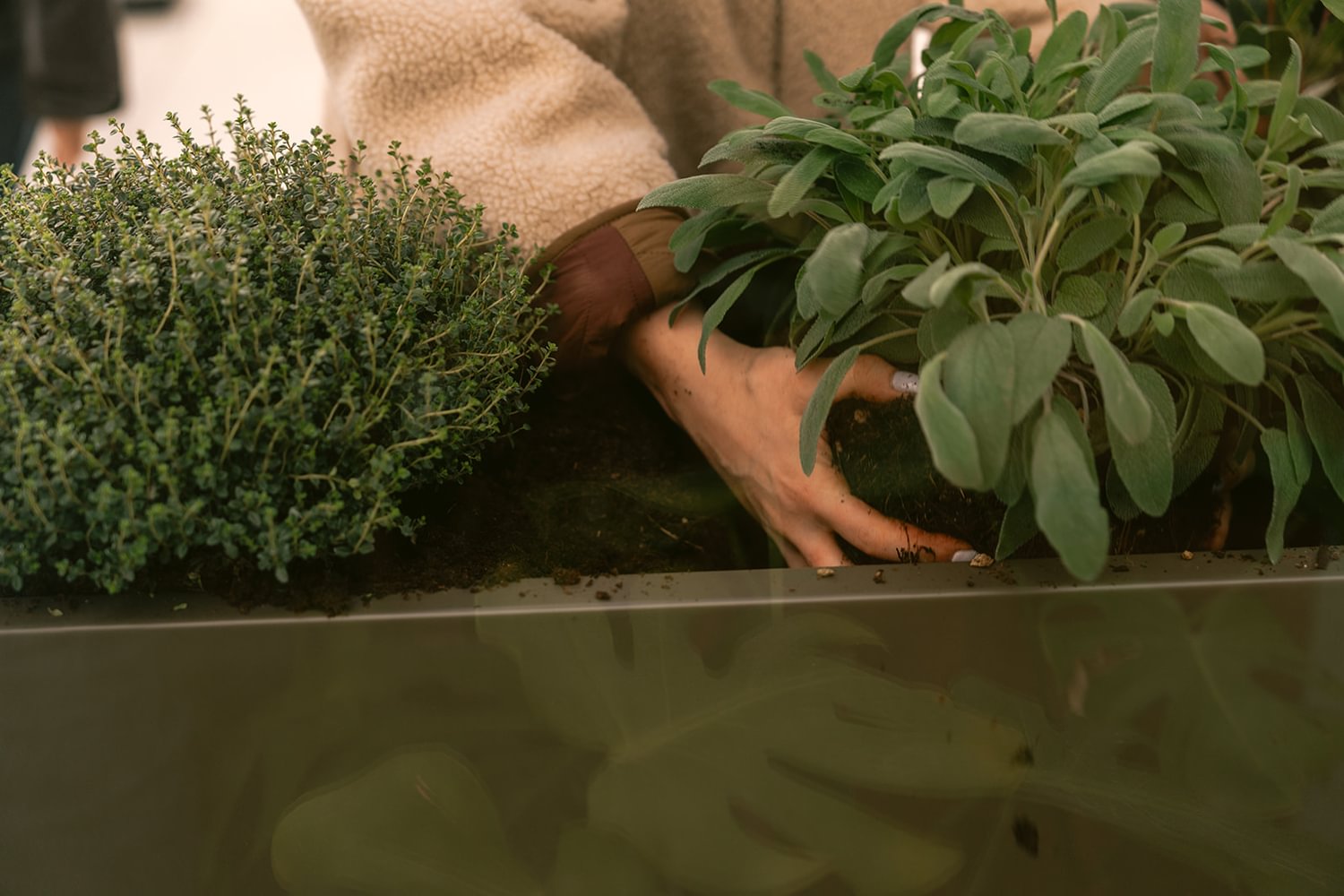
Learning to read plants is mainly something you learn by doing, and yes, also by making mistakes. Not everything will go right straight away, and that's perfectly okay. A plant needs water when the soil is completely dry and the leaves start to droop. Water immediately and increase the frequency. Covering the soil with mulch, such as wood chips, slows down evaporation. Deep green leaves mean a happy plant. Yellow leaves indicate that the plant needs nutrients. Curled leaves often indicate heat; the plant is protecting itself. Prune herbs after each harvest, but always leave some leaves, because without leaves there is no photosynthesis and therefore no growth.
How do you keep the soil fertile in a compact container without completely replacing it every season?
You don't have to empty the container completely at the end of the season. However, the soil will settle because the plants have absorbed nutrients. Replenish it with about ¼ compost and the rest potting soil. If you notice that the soil is settling during the season, you can also add some extra potting soil and compost in between. Compost improves soil structure, retains moisture, gradually releases nutrients, and stimulates soil life, all of which are essential for healthy growth.
What basic tools are really necessary?
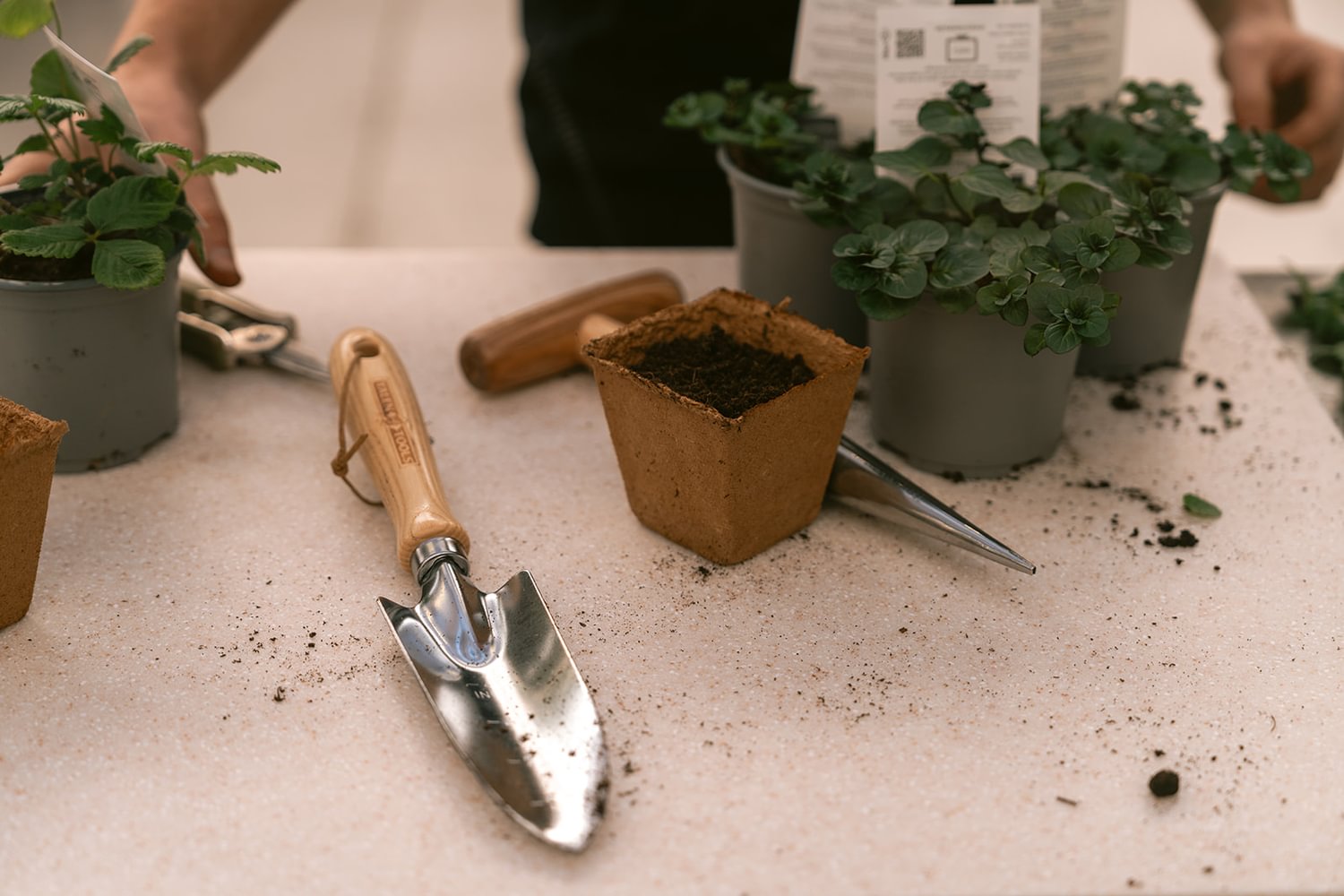
You don't need many tools for a vegetable table. A hand trowel is useful for planting (although you can also just use your hands). A watering can with a spray nozzle is essential for watering with a gentle spray. Keep it filled and next to the table so that watering remains easy. Pruning shears are useful for harvesting and removing dead leaves.
How does the integrated worktop help streamline the vegetable garden routine?
From sowing to harvesting?
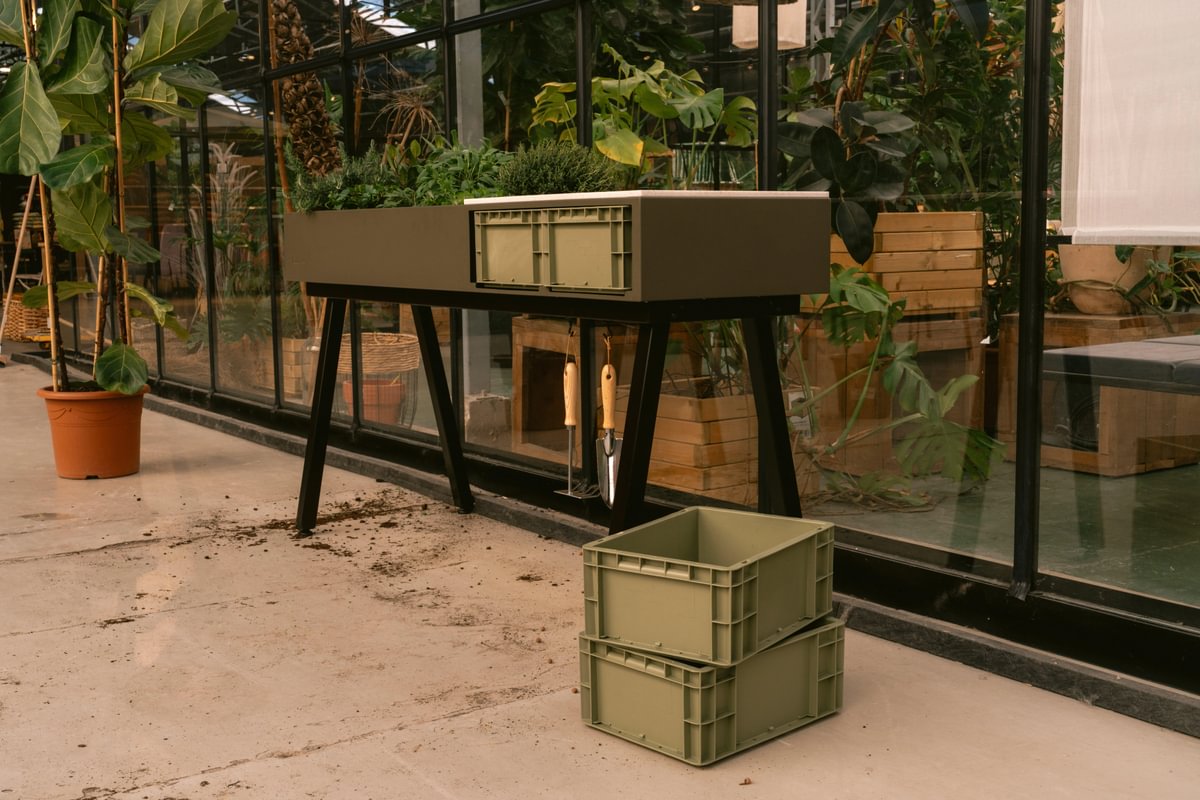
A worktop next to the table makes everything just that little bit easier. You can put your seeds on it while sowing, put a cup of tea on it, and quickly grab your scissors to cut herbs. You can use the basket to take some extra harvest home for dinner. The worktop adds convenience and completes your mini vegetable garden on four legs.
What ecological principles are essential when gardening in a compact system?
Because space is limited, healthy soil is extra important. Water sufficiently and feed the soil well, because plants cannot root as deeply here as they can in open ground. It's all about balance and attention.
With these insights from Floor, maintaining your Gardenworks will hopefully become less of a chore and more of a regular moment of relaxation in your day. Just feel the earth, see what's growing and blooming, and enjoy the results right away. Because as Floor said: you get green fingers by just doing it.
Have you mastered the basics? Then it's time for the finishing touches. In the third and final part of this series, Floor shares her ‘Extra tips & tricks’ to really make your harvest shine. Keep an eye on our page.
Haven't seen the first part yet? Read it here.
Gardenworks
US$1,395.00
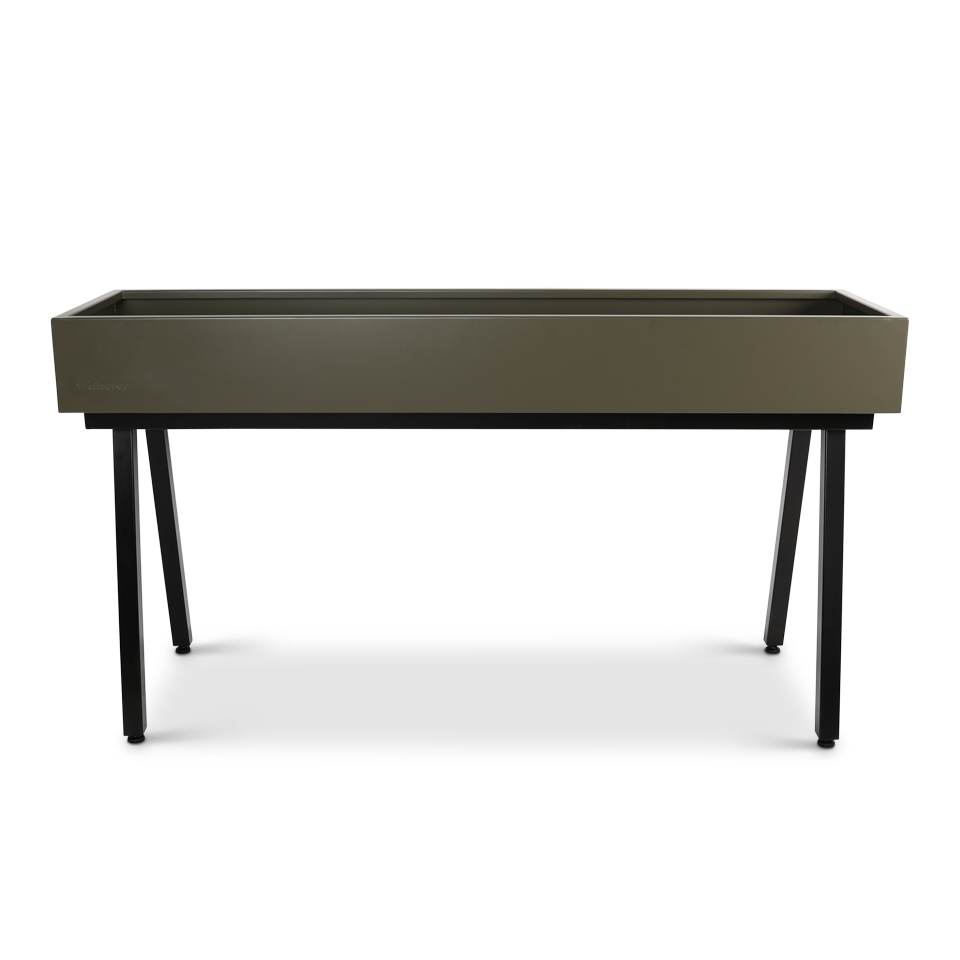
With the Gardenworks, gardening becomes a natural part of your routine. Whereas the usual vegetable and herb garden often has a hidden spot in the back of the yard, the Gardenworks demands to be seen. In a prominent spot right next to the garden door, the planting station acts as an extension of the kitchen, where it encourages the user to take action. The Gardenworks is designed with use in mind. The practical working height of 93 cm makes gardening a pleasant and accessible activity. The drain in the bottom of the planter ensures optimal hydration of the soil: excess water drains away through the two outlets, while a layer of water will always remain for the plants to drink from. This way, you will always have well-cared for and healthy plants. The elegant and thoughtful design reflects a balance between functionality and aesthetics. The interplay of the actions of the user and the elegant design activates and refines the environment. Whether the Gardenworks is placed on the balcony of a modern city apartment, indoors as a way of bringing greenery into your living space or in the garden of a country house, the planting station adds value to your living environment. The Gardenworks invites you to create moments: from harvesting vegetables for dinner to dwelling on the change of seasons. With the Gardenworks, awareness of nature is always at your fingertips.
We deliver the Gardenworks via a specialist furniture delivery service, which is why the delivery time is slightly longer.
Gardenworks Station
US$1,890.00
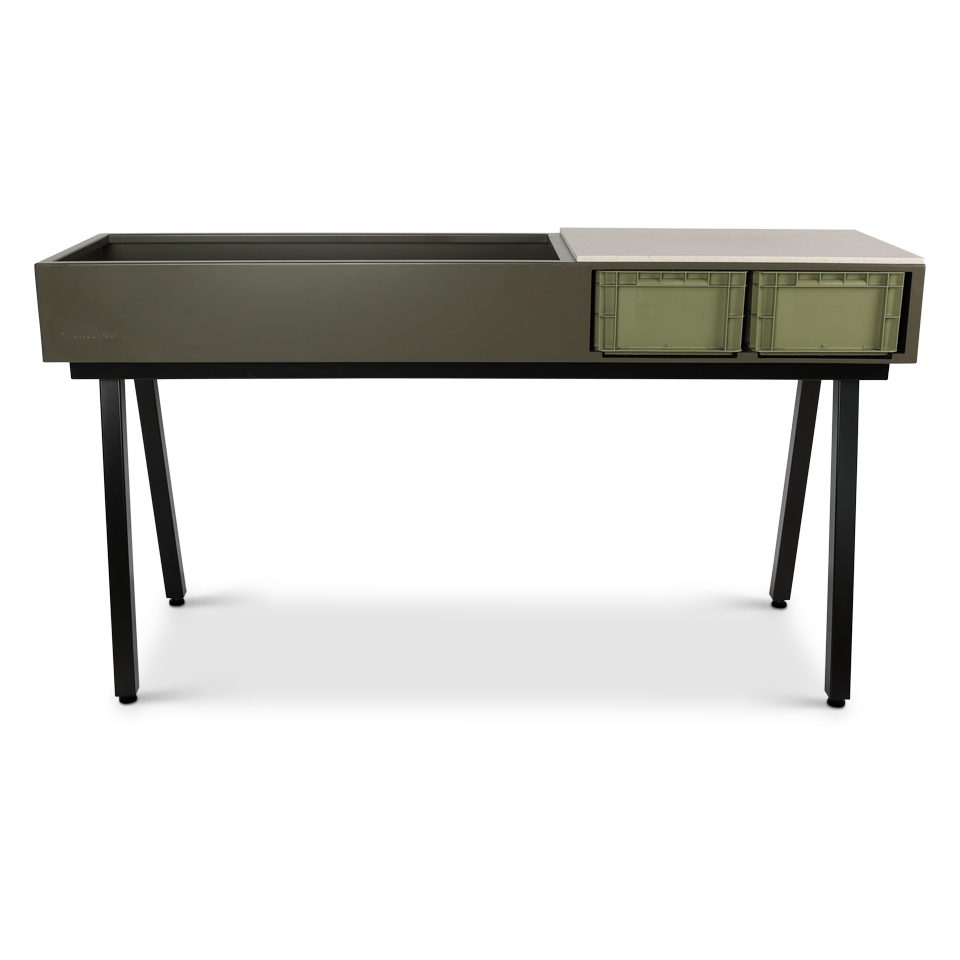
With the multi-purpose Gardenworks Station, gardening and outdoor cooking become a natural part of your daily routine. Whereas the usual vegetable and herb garden often has a hidden spot in the back of the garden, the Gardenworks Station demands to be seen. In a prominent spot right next to the garden door, the object acts as an extension of the kitchen, where it encourages the user to take action. The Gardenworks Station was designed with use as the starting point. The Gardenworks Station consists of a planter and a worktop with a practical working height of 93 cm. Underneath is room for two crates. This combination allows the planting station to be used for gardening as well as outdoor cooking. The drain in the bottom of the planter ensures optimal hydration of the soil: excess water drains away through the two outlets, while a layer of water will always remain for the plants to drink from. So you will always have well-cared for and healthy plants. The elegant and thoughtful design reflects a balance between functionality and aesthetics. The interplay of actions of the user and the elegant design activates and refines the environment. Whether the Gardenworks Station is placed on the balcony of a modern city apartment, indoors as a way of adding greenery to your living space or in the garden of a country house, the planting station adds value to your living environment. The Gardenworks Station invites you to create moments: from cooking outside together to dwelling on the change of seasons. This way, awareness of nature is always at your fingertips.
We deliver the Gardenworks via a specialist furniture delivery service, which is why the delivery time is slightly longer.
Gardenworks Crate
US$15.00
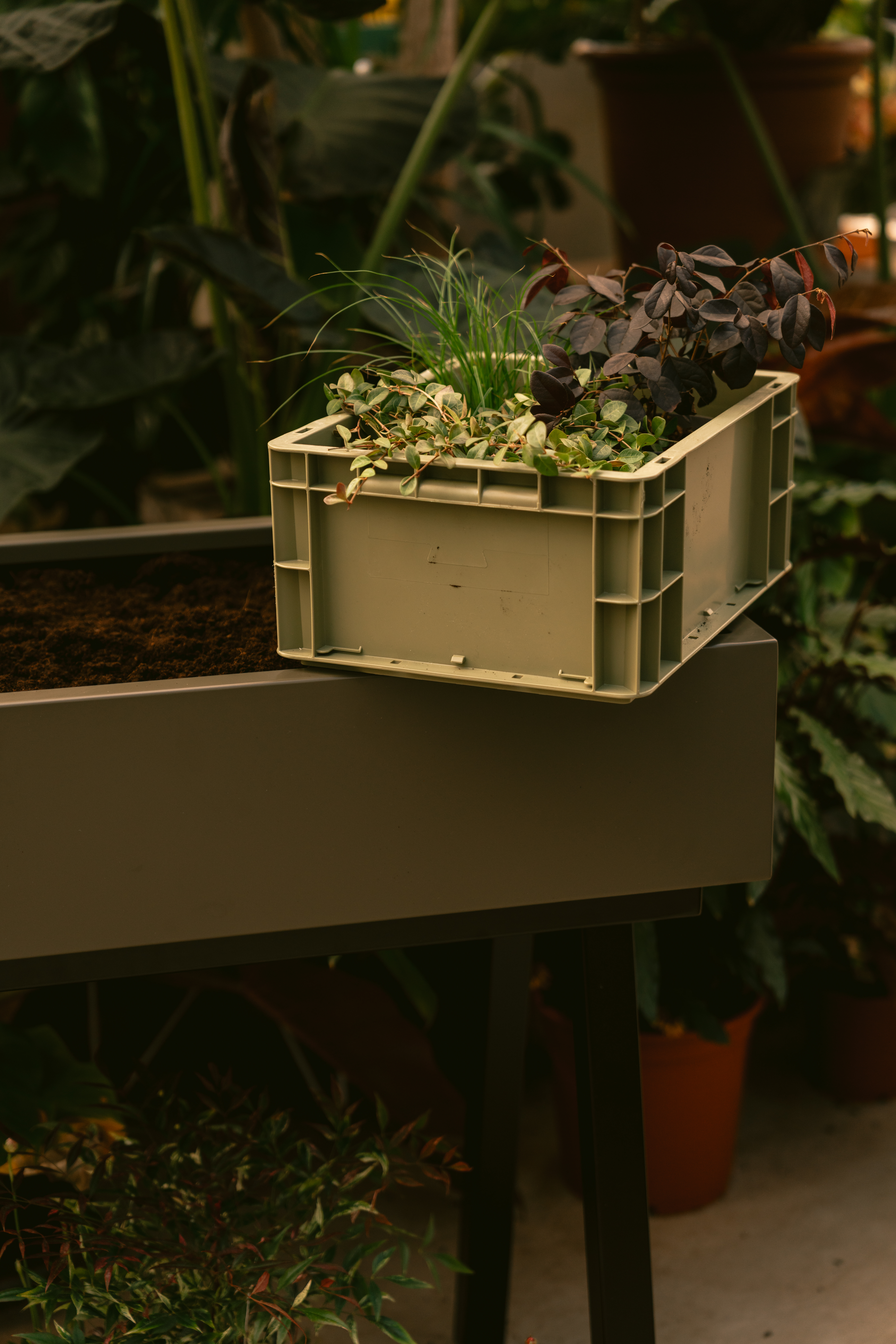
The Weltevree Gardenworks Crate is a versatile storage solution with a sleek, minimalist design. Made from polypropylene material, the crate is available in soft green.You can also purchase the crates separately and use them to organize accessories in the kitchen, shed, or even in the office or other indoor spaces. The crates are easy to stack and sturdy enough to stack higher as well—perfect for storing garden tools or seasonal items.
Discover how the crates are also used in the Gardenworks Station.